
Welcome:
Login
|
Sign Up
|
About CircleID
Follow:
|
|


|
||
|
||
A new CaribNOG programme, backed by the incoming CTU President, bets that regional security depends less on what the region buys than on who it trains, and on whether those people know each other.
Most conversations about Internet security in small island states start with what is missing: equipment, budgets, scale. A programme launched in St Kitts and Nevis last week starts somewhere else. It starts with people.
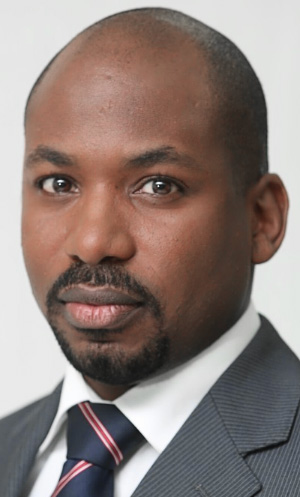
On 15 October, Hon. Konris Maynard, St Kitts and Nevis Minister of ICT and Posts, announced CaribNOG SHIELD, the Security Hub for Infrastructure Enhancement and Local Defense. Maynard was installed as President of the Caribbean Telecommunications Union (CTU) at the union’s ICT Week in Cayenne in September. Speaking in both roles, he pledged his Government’s support and welcomed the programme’s contribution to technical capacity across the wider Caribbean.
“Our countries are placing more of their public services and economic activity online,” Maynard said. “We have a responsibility to ensure that the Caribbean has the expertise to protect those services and the people who depend on them. My Government commends CaribNOG and fully supports its SHIELD initiative as an investment in the people who will secure our region’s digital future.”
His Ministry will work with CaribNOG to introduce SHIELD as an internship programme in the Federation in 2027.
The programme’s name doubles as its design. Each letter maps to a pillar:
The emphasis on routing security and IXPs is deliberate. Small networks rarely get attacked in isolation. They are exposed through the same shared systems that connect them to everyone else: route announcements, peering arrangements and upstream dependencies. Defending those systems takes engineers who understand them in their own local context, and who can pick up the phone to a counterpart in the next territory when something goes wrong.
“Cyber threats do not respect territorial borders, and neither should our collaborative solutions,” Maynard said.
Bevil Wooding, ARIN’s Director of Caribbean Affairs and a co-founder of CaribNOG, describes SHIELD as two investments in one.
“Understanding and securing the critical infrastructure behind the digital services we rely on is vitally important. So too is investing in the training and development of the people responsible for maintaining that infrastructure,” he said. “Through SHIELD, we are building that expertise locally and strengthening the connections between technical teams across the region, so they can share knowledge and act together to address common threats.”
In a region of many small jurisdictions, each with a handful of network operators, the trust between those engineers is a security asset in itself. Incident response across borders still happens mostly through relationships: people who have met, trained together and know whom to call.
That network is already visible at the institutional level. One week before the St Kitts launch, CTU Secretary-General Rodney Taylor delivered the opening keynote at CaribNOG 32 in Willemstad, Curaçao. A week later, the CTU President launched a CaribNOG programme on a stage shared with ARIN. The intergovernmental body, the regional Internet registry and the volunteer operator community are already connected.
The launch came at a seminar organised by ARIN and CaribNOG with the Ministry, held under the theme “Securing Our Digital Foundations: Understanding Internet Security and Why It Matters.” More than 80 public and private sector leaders took part, along with students from the Clarence Fitzroy Bryant College. ARIN Chief Technology Officer Mark Kosters led the technical sessions, covering how Internet infrastructure works, where risks arise and the practices that protect networks and services.
Wooding framed the stakes in governance terms.
“Every service we move online creates an expectation that people will be able to use it, that their information will be handled responsibly, and that the institution behind it will know what to do when something goes wrong,” he said. “The ambition to transform the country must be matched by the capacity to govern and sustain that transformation. Cyber resilience belongs within the leadership of that agenda, informing its priorities and the standards by which progress is judged.”
It is a pointed message for governments across the region now rolling out digital IDs, e-government portals and online payments. The platforms can be procured. The capacity to run and defend them has to be grown.
ARIN says it plans to take this work to other Caribbean territories, helping countries build the technical expertise and institutional capacity their digital agendas require. The open questions are practical ones: how many interns SHIELD will take, which territories follow St Kitts and Nevis, and whether the programme becomes a permanent pipeline rather than a single cohort.
CaribNOG’s next community meetings take place in Anguilla on 21–22 April 2027 and in Sint Maarten on 14–15 September 2027. Both will show how far SHIELD has travelled.
Sponsored byVerisign

Sponsored byIPv4.Global

Sponsored byDNIB.com

Sponsored byCSC

Sponsored byVerisign

Sponsored byWhoisXML API

Sponsored byRadix


A World-Renowned Source for Internet Developments. Serving Since 2002.